
Record when the patch gets wet and which side of the chimney it is on. If the stack is shared, observations from both homes help narrow down the cause.
Which clues point to rain or condensation?
From a safe position indoors, take an overview and a close-up. Note the date, any recent rain and, if known, the wind direction. Water may travel along roof timbers before it becomes visible indoors.
| What do you notice? | What can a professional check? |
|---|---|
| Wet patch after wind-driven rain from one direction | Flashing around the stack, adjacent roof covering and drainage on the upslope side. |
| Masonry feels damp after prolonged rain | Mortar joints and the capping at the top of the stack. Cracks or open joints can admit water. |
| The patch returns in dry weather | Ventilation, condensation or moisture-attracting salts in an old flue. List any appliances and vents still connected. |
What if the leaking chimney is shared?
Ask neighbours where they see damp, on which floor and when it appears. A single stack can contain several flues. Before work, have each flue traced to the home and appliance or vent it serves. For a Dutch apartment, ask the owners’ association (VvE) for the division documents and any record of earlier roof repairs.
Record which side will be worked on, who will provide access and how the roof junction on each side will be finished. An inspection of both sides can help even when only one house is damp.
When does repair or removal make sense?
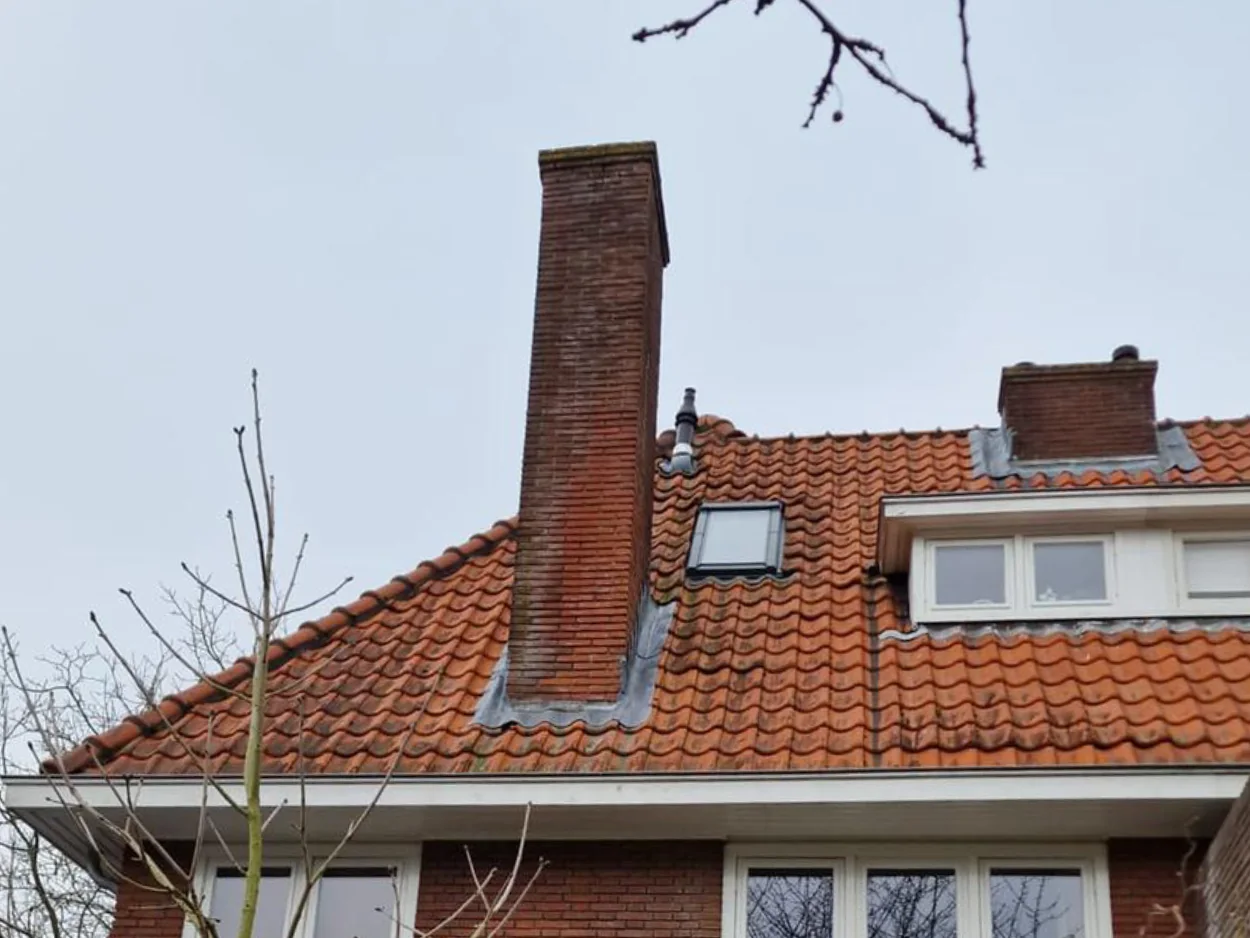
Local repairs may resolve a defect in flashing or mortar joints. If a flue is still used, specify how its function will be retained. For an unused chimney, compare this with removing the stack above the roof. Ask for the closing of the roof opening and the reinstatement of the roof covering as separate items.
Compare retention, local repair and above-roof removal
Technical guidance on rain penetration and condensation in chimneys (SPAB, PDF)
Discuss your home
Considering removal of an unused stack? Include when the leak appears, whether a neighbour is affected and which parts must remain. Photos taken indoors or from the ground help with the initial assessment.
Request a quote